‘Tis the season for setting the boundaries you want!
Remember the cootie catchers of our youth? They told us who we would marry. And – spoiler alert here – they don’t actually work. Despite the assertion of a cootie catcher one of the authors remembers fondly from 6th grade, she never did, in fact, marry Darrin Praeger.
The SJFB cootie catcher will not offer you the names of potential future partners, but will remind you of a number of techniques, both verbal and physical, that you can use in setting boundaries, both verbal and physical.
So have fun! So see below for our cootie catcher you can print, cut, fold, and give away! These make a great stocking stuffer or embellishment for your gift wrapped package. Remember, ‘tis the season for setting the boundaries you want!
Wishing you a safe, healthy and happy holiday season,
Martha McCaughey and Jill Cermele

SJFB Cootie Catcher Instructions:
- Print and cut round outside of cootie catcher
- Fold in half and in half again
- Open out, turn over so top is blank and fold each corner into the middle
- Turn over and repeat
- Turn over so you can see the pictures
- Slide your thumb and your finger behind 2 of the pictures and press together so they bend round and touch
- Turn over and repeat with the thumb and finger of the other hand for the other two pictures
- All the pictures should now be at the front with centres touching and you are ready to use your cootie catcher!
www.seejanefightback.wordpress.com
with thanks for the template to www.downloadablecootiecatchers.wordpress.com
Ten Things Never to Say to a Stegosaurus Training in Self-Defense
- “The point really should be to get T-Rex to be more peaceful.”
- “What would you do if Triceratops had an Iguanodon with him?”
- “What if you’d been eating ferns and conifer all night, and were just too full to be able to defend yourself?”
- “Why don’t I just dress up like T-Rex and let you practice on me?”
- “If you’d just stay out of T-Rex territory, everything would be fine.”
- “Isn’t this just a waste of time? You’re an herbivore, he’s a carnivore…That’s just the way it is.”
- “Maybe you should get a nice Brontosaurus to walk you home. Otherwise, you’re just asking for trouble.”
- “You know, I’ve always thought it would be a turn-on to be knocked out by a sexy Stegosaurus.”
- “When a T-Rex attacks you and feeds on your bloody carcass, it just means he likes you.”
- “Well, all these skills you’re learning are well and good until a giant asteroid hits the Earth.”
Jane Gives Thanks
Readers, as we enter the holiday season, we at See Jane Fights Back would like to take a moment to express our appreciation.
We are grateful to our self-defense activist and scholar colleagues, for their efforts to empower women and girls, and in doing so, to shift the narratives about the perceived inevitability of sexual violence and the perceived omnipotence of perpetrators.
We are thankful for you, our readers, for reading and sharing our blog, and for all the feedback, comments, and stories you have shared with us.
Finally, we acknowledge all those who have been targeted for or experienced sexual violence; we admire and appreciate their courage and perseverance, their willingness to share their stories, and for reminding us all that resistance takes many, many forms.
PS. Snarky commentary returns next week.
An Open Letter to CNN’s Don Lemon and Other Journalists Who Interview Women Who Report They were Sexually Assaulted
Dear Mr. Lemon:
National and international media outlets are covering various aspects of the rape allegations made against actor and comedian Bill Cosby, dating back over four decades. None of it is surprising – not additional victims coming forward, not various celebrities expressing skepticism or disbelief, not stories about the psychological functioning or motives of those bringing allegations.
Nor is it surprising that women who come forward are being asked why they didn’t fight back.
On the evening of November 18, CNN reporter Don Lemon, in an interview with Joan Tarshis, one of several women who are reporting they were raped or assaulted by Cosby, said the following:
“You know, there are ways not perform oral sex if you didn’t want to…meaning using of the teeth…as a weapon…biting…I had to ask.”
No, Mr. Lemon, you didn’t have to ask.
We’re not going to ask you if you would bite the penis of a man orally raping you, Mr. Lemon. We’re not going to ask you if you think you would do it, if a man tried to orally rape you, either.
That’s not a question, Mr. Lemon. That’s victim-blaming.
Advocates of self-defense and self-defense training for women could tell you that, Mr. Lemon. We don’t tell women what they should do. We don’t ask them why they didn’t do it, if they have been raped or assaulted in the past.
Ms. Tarshis says that it did not occur to her to bite his penis. That is the option that occurred to you, when you heard the story, Mr. Lemon. It may or may not have occurred to you in the moment if someone were assaulting you.
This is why self-defense training is so important. Championing self-defense training for women should not be confused with saying that a woman should have resisted. Self-defense training teaches women strategies and options so that if someone tries to rape or assault them, they have a range of choices available to them. And so that they feel empowered to act on those choices, if they choose to, because they believe they are entitled to, because they have the knowledge and practice in doing so, and because they know that if one strategy doesn’t work, another one – verbal or physical – might. Self-defense training helps make resistance a viable option. And, Mr. Lemon, we trust that women make the choice that is the safest, the best, for them, in that moment, and we don’t judge or question their choices.
We don’t tell them what that choice should have been, Mr. Lemon, because we don’t know. And asking a survivor of rape or sexual assault why they didn’t resist in the particular way you can envision, even though you were not there and have no idea whether that would have been a safe, viable, or appropriate choice, is telling them what you think they should have done. Or what you think you would have done.
Instead, Mr. Lemon, you could have applauded Ms. Tarshis for coming forward with her story, and told her that you don’t blame her or hold her responsible for the violence that was perpetrated against her. You could have told her that you believe that she made the best choice she could in a terrifying and dangerous situation.
Mr. Lemon, perhaps you were trying to be helpful. So let us help you, Mr. Lemon, with what NOT TO SAY to someone who tells you they were raped or sexually assaulted:
- Why didn’t you…(fight back, knee him in the groin, bite his penis, scream for help…or whatever you believe she should have/you would have done in the same situation)?
- Why did you…(wear that, go there, say that, do that…or whatever behavior you see as the reason she was raped or sexually assaulted)?
- Why were you…(drinking, drunk, smoking, high…or using whatever substance you think made her responsible for someone raping or sexually assaulting her)?
- If it were me…(fill in the blank with your solution to avoiding rape or sexual assault).
Resistance is complicated, and difficult, and scary, Mr. Lemon, and while many girls and women resist – some with self-defense training, and more without – your question suggests that resistance is simple and easy and obvious and what you would have done/what everyone should have done. Your question suggests that in the absence of resistance, it wasn’t really rape, or that the rape was the responsibility of the survivor, not the perpetrator.
Mr. Lemon, we live in a society that does not offer girls and women any regular opportunities to learn how to value themselves and their bodily boundaries, or how to use their bodies aggressively (remember, we’re the cheerleaders, not the football players), and in a society that routinely tells girls and women NOT to fight back because it won’t work or they’ll get hurt or they’ll make things worse. And yet, the question you ask is, “Why Didn’t She Do This or That Aggressive Act in Self-Defense?!
We could add, Mr. Lemon, how about you ask why we’re not teaching girls and women to defend themselves, violently, if necessary. That’s our question, Mr. Lemon. Next time, make it yours.
Sincerely,
Jill Cermele and Martha McCaughey
An Open Letter to Cory Rosenkranz, Counseling Center, Ramapo College
Dear Ms. Rosenkranz,
We have seen multiple stories now – first in the Ramapo News from Ramapo College, but then in Jezebel, in Addicting Info, in the Telegraph – about how you recommended that female students practice their “anti-rape faces in the mirror”. Or words to that effect.
That’s not prevention, Ms. Rosenkranz. That’s victim-blaming. We don’t need to practice our anti-rape faces. Any face we make is an anti-rape face.
Prevention is focusing on changing a rape culture that perpetuates the myth that men’s rape of women as inevitable. Prevention is acting to change social norms about men’s beliefs about their entitlement to women’s bodies, and the eliminating the behaviors that follow those beliefs. And prevention is teaching women how to physically and verbally thwart an attempted sexual assault.
Women do not invite rape by how they look, or what they wear, or the expression on their faces. Or by their perceived attractiveness, or their relationship status, or their sexual orientation, or the color of their skin. Or anything else.
Got that?
We want to reduce women’s risk for assault, Ms. Rosenkranz. We assume you do, too. But if you want to make women safer, empower them – don’t blame them. Encourage your campus to offer self-defense classes that, as the data show, actually reduce the chance that they will be raped and increase women’s feelings of confidence and empowerment.
We assume your goal is to reduce sexual assault on your campus, Ms. Rosenkranz. But making faces doesn’t make people stop raping. Action does. And that’s why we are writing to you, rather than making a “we don’t like what you’re saying” face.
Women’s faces/bodies/clothes/words/behaviors DO NOT invite rape, and rape prevention is not about withdrawing an invitation. So please – check the data, and get your facts straight.
Sincerely,
Jill Cermele and Martha McCaughey
Frequently Asked Questions about Self-Defense
With her permission, we give you Dr. Jocelyn Hollander’s FAQs about Self-Defense, with her terrific, well grounded answers to them.
Women’s Self-Defense Frequently Asked Questions* (*pdf file of this document is linked at the end!)
Jocelyn A. Hollander, Ph.D., University of Oregon September 15, 2014
What is women’s self-defense?
- Perhaps the most common stereotype of women’s self-defense is a woman – probably young, white, and fit – karate-kicking a stranger in a dark alley or parking garage. However, self-defense is far more than just physical fighting, and it is accessible to all women, regardless of their age, race, level of fitness, or physical ability. It also addresses far more than just assaults by strangers.
- There are many types of self-defense training. The kind that has been most frequently studied by researchers is empowerment self-defense. These classes:
- focus on the full range of violence against women, especially acquaintance assaults, which are the most common type of sexual assault.
- include awareness and verbal self-defense strategies as well as physical These skills empower women to stop assaults in their early stages, before they escalate to physical danger.
- teach effective physical tactics that build on the strengths of women’s bodies and require minutes or hours rather than years to master.
- offer a toolbox of strategies for avoiding and interrupting violence, and, rather than teaching a single “best” way to respond to violence, empower women to choose the options that are appropriate for their own situations.
- address the social conditions that facilitate sexual assault and the psychological barriers to self-defense that women face as a result of gender socialization.
Does self-defense prevent violence?
This is really two questions:
- First, can women’s resistance stop sexual assault? The answer is a resounding yes. There is a large and nearly unanimous body of research that demonstrates that women frequently resist violence, and that their resistance is often successful. This research, of course, includes many women without self-defense training.
- Second, does self-defense training decrease women’s risk of assault? There is a smaller but rapidly expanding research literature that suggests that women who learn self-defense are significantly less likely to experience assault. For example, Hollander’s research (2014) found that women who enrolled in a holistic, empowerment-based self- defense class were 2.5 times less likely to be assaulted over the following year, compared with similar women who did not take such a class. No women with self-defense training, but nearly 3% of women without training, reported being raped during the follow-up period.
Does self-defense increase a woman’s risk of injury?
- No. There is an association between resistance and injury, in that women who resist a sexual assault are also more likely to be injured. But research that looks at the sequence of events has found that in general, the injury precedes the resistance. In other words, women resist because they are being injured, rather than being injured because they resist. On average, resistance does not increase the risk of injury.
Shouldn’t we be putting all our resources into prevention strategies focused on perpetrators?
- No. Violence against women is a complex social problem. Ultimately, large-scale social changes will be needed before violence against women can be stopped. However, this kind of social change is slow – and so far, our efforts have not been very successful. If we focus only on perpetrator-focused, “primary” prevention strategies, we are condemning millions of women to suffering rape and sexual assault. While we wait for these efforts to work, empowerment-based self-defense training can provide an immediate, and effective, antidote for sexual violence.
- There has been little research on the effectiveness of prevention strategies focused on potential perpetrators. Most strategies that have been rigorously evaluated have been found to be ineffective at preventing violence.
- Preventing sexual violence will require a comprehensive range of efforts. Some efforts should be long-term (e.g., cultural climate assessment and change), others should be medium-term (e.g., bystander intervention training), and some should be short-term (e.g., self-defense training). We do not have to choose only one approach; a complex social problem requires that we address it on multiple fronts and in multiple ways.
Is self-defense training cost-effective?
- Yes. Sexual assault is very expensive, in terms of post-assault medical service, legal services, and human suffering. Self-defense training, in contrast, is quite inexpensive. A recent Nairobi-based study found that comprehensive self-‐defense training cost US$1.75 for every assault prevented, compared with an average of US$86 for post-assault hospital services. Given the higher cost of medical services, it is likely that the savings would be even greater in the United States.
Is self-defense victim blaming?
- No. Empowerment-based self-defense classes explicitly attribute responsibility for assault to perpetrators, not victims. Just because a woman is capable of defending herself does not mean that she is responsible for doing so.
- Although self-defense training is frequently lumped in with other kinds of risk reduction advice (e.g., staying out of public spaces, traveling with a buddy, wearing modest clothing, or avoiding alcohol), it differs in important ways. Staying home, relying on others for protection, and limiting one’s clothing or alcohol consumption all constrain women’s lives. Self-defense training, in contrast, expands women’s range of action, empowering them to make their own choices about where they go and what they do.
- Some people have worried that women who learn self-defense may blame themselves if they are later unable to prevent an attack. However, research has found that women with self-defense training who experience a subsequent assault blame themselves no more – or even less – than women without self-defense training. Moreover, women who are raped but physically resist are actually less likely than other women to blame themselves for their assault.
What else should I know about self-defense training?
- Learning self-defense empowers women in ways that go far beyond preventing assault. Self-defense training decreases women’s fear and anxiety and increases their confidence, their sense of self-efficacy, and their self-esteem. Learning self-defense helps women feel stronger and more confident in their bodies. Women report more comfortable interactions with strangers, acquaintances, and intimates, both in situations that seem dangerous and those that do not.
Further Resources and Research on Women’s Resistance and Self-Defense
What is women’s self-defense?
Thompson, Martha E. 2014. “Empowering Self-Defense Training.” Violence Against Women 20(3):351–359.
Does self-defense prevent violence?
Gidycz, Christine A, and Christina M. Dardis. 2014. “Feminist Self-‐Defense and Resistance Training for College Students A Critical Review and Recommendations for the Future.” Trauma, Violence, & Abuse 1524838014521026.
Hollander, Jocelyn A. 2014. “Does Self-‐Defense Training Prevent Sexual Violence Against Women?” Violence Against Women 20(3):252–269.
Orchowski, Lindsay M., Christine A Gidycz, and Holly Raffle. 2008. “Evaluation of a Sexual Assault Risk Reduction and Self-Defense Program: A Prospective Analysis of a Revised Protocol.” Psychology of Women Quarterly 32:204–218.
Sarnquist, Clea et al. 2014. “Rape Prevention Through Empowerment of Adolescent Girls.” Pediatrics peds.2013– 3414.
Senn, Charlene Y., Stephanie S. Gee, and Jennifer Thake. 2011. “Emancipatory Sexuality Education and Sexual Assault Resistance: Does the Former Enhance the Latter?” Psychology of Women Quarterly 35(1):72–91.
Sinclair, Jake et al. 2013. “A Self-‐Defense Program Reduces the Incidence of Sexual Assault in Kenyan Adolescent Girls.” Journal of Adolescent Health 53(3):374–380.
Tark, Jongyeon, and Gary Kleck. 2014. “Resisting Rape The Effects of Victim Self-‐Protection on Rape Completion and Injury.” Violence Against Women 20(3):270–292.
Ullman, Sarah E. 2007. “A 10-‐Year Update of ‘Review and Critique of Empirical Studies of Rape Avoidance’.”
Criminal Justice and Behavior 34(3):1–19.
Ullman, Sarah E. 1997. “Review and Critique of Empirical Studies of Rape Avoidance.” Criminal Justice and Behavior 24:177–204.
Brecklin, Leanne R., and Sarah E. Ullman. 2005. “Self-‐Defense or Assertiveness Training and Women’s Responses to Sexual Attacks.” Journal of Interpersonal Violence 20(6):738–762.
Does self-defense increase a woman’s risk of injury?
Ullman, Sarah E., and R. A. Knight. 1992. “Fighting Back: Women’s Resistance to Rape.” Journal of Interpersonal Violence 7:31–43.
Ullman, Sarah E, and Raymond A Knight. 1993. “THE EFFICACY OF WOMEN’S RESISTANCE STRATEGIES IN RAPE SITUATIONS.” Psychology of Women Quarterly 17(1):23–38.
Aren’t prevention strategies focused on perpetrators a better idea?
Gidycz, Christine A et al. n.d. “Concurrent administration of sexual assault prevention and risk reduction programming: Outcomes for women.” Violence Against Women. In press.
Gidycz, Christine A, and Christina M. Dardis. 2014. “Feminist Self-‐Defense and Resistance Training for College Students A Critical Review and Recommendations for the Future.” Trauma, Violence, & Abuse 1524838014521026.
Orchowski, Lindsay M, Christine A Gidycz, and M J Murphy. 2010. “Preventing campus-‐based sexual violence.” Pp. 415–447 in The Prevention of Sexual VIolence: A Practitioner’s Sourcebook, edited by K L Kaufman. Holyoke, MA: NEARI Press.
Breitenbecher, K. H., and M. Scarce. 1999. “A Longitudinal Evaluation of the Effectiveness of a Sexual Assault Education Program.” Journal of Interpersonal Violence 14(5):459–478.
Hollander, Jocelyn A. 2014. “Does Self-‐Defense Training Prevent Sexual Violence Against Women?” Violence Against Women 20(3):252–269.
Sarnquist, Clea et al. 2014. “Rape Prevention Through Empowerment of Adolescent Girls.” Pediatrics peds.2013– 3414.
Sinclair, Jake et al. 2013. “A Self-‐Defense Program Reduces the Incidence of Sexual Assault in Kenyan Adolescent Girls.” Journal of Adolescent Health 53(3):374–380.
Is self-defense training cost-effective?
Sarnquist, Clea et al. 2014. “Rape Prevention Through Empowerment of Adolescent Girls.” Pediatrics peds.2013– 3414.
Is self-defense victim blaming?
Bart, Pauline B., and Patricia H. O’Brien. 1985. Stopping Rape: Successful Survival Strategies. Elmsford, NY: Pergamon.
Cermele, J. A. 2004. “Teaching Resistance to Teach Resistance: The Use of Self-‐Defense in Teaching Undergraduates about Gender Violence.” Feminist Teacher 15(1):1–15.
Gidycz, Christine A et al. n.d. “Concurrent administration of sexual assault prevention and risk reduction programming: Outcomes for women.” Violence Against Women. In press.
Orchowski, Lindsay M., Christine A Gidycz, and Holly Raffle. 2008. “Evaluation of a Sexual Assault Risk Reduction and Self-‐Defense Program: A Prospective Analysis of a Revised Protocol.” Psychology of Women Quarterly 32:204–218.
Rozee, Patricia D, and Mary P Koss. 2001. “Rape: A Century of Resistance.” Psychology of Women Quarterly 25(4):295–311.
What else should I know about self-defense training?
Brecklin, Leanne R. 2008. “Evaluation Outcomes of Self-‐Defense Training for Women: A Review.” Aggression and Violent Behavior 13:60–76.
Hollander, Jocelyn A. 2004. “‘I Can Take Care of Myself’: The Impact of Self-‐Defense Training on Women’s Lives.”
Violence Against Women 10(3):205–235.
McCaughey, Martha. 1997. Real Knockouts: The Physical Feminism of Women’s Self-Defense. New York: New York University Press.
Ozer, Elizabeth M., and Albert Bandura. 1990. “Mechanisms Governing Empowerment Effects: A Self-‐Efficacy Analysis.” Journal of Personality and Social Psychology 58(3):472–486.
Weitlauf, Julie C., D. Cervone, R. E. Smith, and P. M. Wright. 2001. “Assessing Generalization in Perceived Self-Efficacy: Multidomain and Global Assessments of the Effects of Self-Defense Training for Women.” Personality & Social Psychology Bulletin 27(12):1683–1691.
Weitlauf, Julie C., Ronald E. Smith, and Daniel Cervone. 2000. “Generalization Effects of Coping Skills Training: Influence of Self-Defense Training on Women’s Efficacy Beliefs, Assertiveness, and Aggression.” Journal of Applied Psychology 85(4):625–633.
*A pdf file of the Self-Defense FAQs is here: SD FAQ
Jane’s Top 10 Halloween Costumes for 2014
As Halloween draws near, we are again besieged with ads for Halloween costumes that range from truly horrifying to…well, truly horrifying. And as always, the easiest costumes to find for women invariably begin with the adjective “sexy” or “slutty”. Here at SJFB, however, we know that what can be truly horrifying – in the monster-under-the-bed/what’s-behind-the-shower-curtain/who’s-waiting-for-you-in-the-parking-garage kind of way, is the idea of real empowerment for women that is not predicated on men’s whims, permissions, or fantasies. BOO!
To that end, as huge Halloween fans, and with the history of being the ones at the party wearing the tongue-in-cheek Halloween costume with irreverent delight, serious irony, and finely honed feminist analysis, we thus offer you JANE’S TOP 10 HALLOWEEN COSTUMES FOR 2014:**
10. SEXY STRIP OF BACON
Rather than making all the respectable occupations women have fought their way into “sexy” costumes for Halloween, select an inanimate object that looks decidedly nonsexy when dressed in it. For example, this year Wal-Mart sells a body-length bacon strip costume. Add this year’s popular TaTa top over your bacon-clad chest and you’re done. [You had me at bacon. . . .]
9. FEMINIST PROSTITUTE
If most people are out there setting the women’s movement back three decades by sexualizing women in respectable professions, we’ll take a profession most think of as not respectable and remind people that feminism is about beliefs, actions, and perspectives, not occupations. Dress like a siren, carry a red umbrella as well as signs that say, “De-criminalize Prostitution”, “Rights for Sex Workers” and “No More Slut-Shaming”.
8. BEYONCÉ VOTER
While the conservatives on Fox News this year may have dismissed single mothers as “Beyoncé Voters” you’ll frighten Fox News when you show them just how women can vote like Beyoncé. Wear a fantastic gown that hugs your awesome booty, add an “I Voted” sticker, and carry signs with some of Beyonce’s most frightening-to-Fox music lyrics: “Try to Control Me, Boy You Get Dismissed”; “All My Ladies on the Floor (of the House and Senate)”; and “If You Liked it then You Shoulda Put a (Nuva) Ring on it (even if you work at Hobby Lobby)”.
7. THE CAVEWOMAN WHO HAS IT ALL
Wear a one-shoulder fur pelt, carry a stone club for hunting in one hand and a woven basket for gathering in the other, cavebaby strapped on so she can breastfeed while simultaneously hunting and/or gathering, and hum “Me Will Survive”.
6. DISNEY’S VERSION OF FEMINISM
Choose your favorite feminist–Gloria Steinem, Alice Paul, Sojourner Truth, Ruth Bader Ginsberg, Susan B. Anthony, bell hooks, Benazir Bhutto, Joan of Arc. Now, make her look fancy! A frilly dress, pretty shoes, a sparkly necklace, and a jeweled crown. And, of course, the requisite (male, taller) prince by your side.
5. A WOMAN AGAINST FEMINISM
You may have seen the Tumblr site (it really exists and it’s really scary!). You’ll need to wear your best frock (pressed by your housekeeper, if you don’t have time!), looking hot enough to turn on your husband when he comes home from work but not so hot that any other man would ever look at you with anything other than envy for your husband; forced smile and gritted teeth holding back your rage that only 18% of the Senate is female and that 1 in 5 women will be raped during college; and holding a sign that says “I don’t need feminism because I don’t mind not having equal rights, finding my value in men’s assessment of my appearance, and living in a rape culture”.
4. BYSTANDER BRIGADE
(fun group costume!)
Your opportunity to be the knights in shining armor! So own it – shiny metal knight attire, sword at the ready to slay the dragon/rapist, steed at hand to carry off grateful damsel in distress. Bring your friends! That, and script in hand, prompting you to invite the errant evil knight to get another beer, play another game of pool, or whatever distraction technique you might need to employ to redirect his plan to rape. Optional props: red flags to wave, or green dots to apply, as needed; damsel in distress.
3. MONTY PYTHON KNIGHTS WITH KILLER COLLEGE GIRL
(another fun group costume!)
Use the same costuming as above (a groups of knights), only this damsel wears a white eyelet party dress. From a distance, she may look all innocent and helpless but, just like the white rabbit in Monty Python and the Holy Grail, don’t let her fool you. She has a mouth dripping with blood and is carrying a skull along with her red Solo cup. Suggested dialogue:
College Guy 1: “That girl’s got a vicious streak a mile wide!”
College Guy 2: “What, behind the college girl?”
College Guy 1: “That’s no ordinary college girl!”
College Guy 3: “What’ll she do, nibble your bum?”
College Guy 1: “She’s got huge, sharp—eh. . . she can leap about. . . look at the bones!”
College Guy 2: “Right, silly little bleeder. One blow job comin’ right up!”
Every once in a while, the college girl attacks and the group of knights retreat shouting, “Run away! Run away!”
2. NFL DOMESTIC VIOLENCE CONSULTANT
Wear athletic workout wear, protective eyeglasses, and carry a clipboard with a pen. Attach a nametag, “NFL DV Investigations” to your jacket. Everywhere you go, explain how the NFL takes the crime of domestic violence very seriously. Then sit back and enjoy the party because you’re not really going to do anything!
1. TODD AKIN’S LEGITIMATE RAPE TEST
Using a white plastic trash bag, dress as a home pregnancy test stick. Have people pee on you, and if the stick reveals just one horizontal pink line, that person was legitimately raped (and not pregnant). If there is a pink plus sign, that person was not legitimately raped (and can make “barefoot and pregnant” their Halloween costume). [If you’re out with friends, have them wear buttons that say, “Evolution is Religion, not Science”, “Card-Carrying Member of the Institute for Creation Research”, or “I’m With Todd”.]
**Be aware you run the risk of needing to explain not just who you are dressed in but the fact that you are, actually, dressed for the holiday. One of your SJFB bloggers had the experience in college of attending a “come as you’re not” Halloween party, dressed as a fellow (highly annoying) classmate, only to have said classmate appear at the party and ask why she was not wearing a costume. True story.
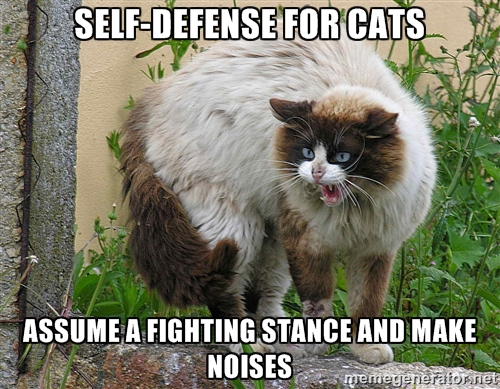
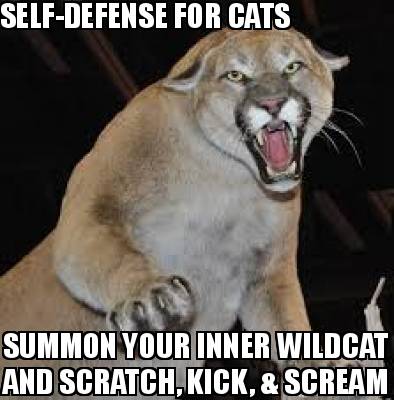


Color Names for the New Anti-Rape Nail Polish
Feminists wishing to indulge in the guilty pleasure of getting a manicure can soon do so while resisting rape at the same time. Some smart students at NC State–Ankesh Madan, Stephan Gray, Tasso Von Windheim, and Tyler Confrey-Maloney–created a nail polish that detects date rape drugs. The polish changes color if your polished fingernail is dipped into a drink that contains common date-rape drugs like Rohypnol, Xanax, or Gamma-Hydroxybutyric acid in it. Of course, we all know that the most common date-rape drug is plain old alcohol, but if a drug like this gets mixed into an alcoholic drink, its effect can magnify alcohol’s impact and lead to memory loss and even medical crisis.
The drug-detecting nail polishes are being developed under the name of “Undercover Colors” and have not been released to the public yet. Some protest the development and marketing of this nail polish based on the belief that the onus should not be on women to prevent and end rape and that the pretty polishes are victim-blaming. We agree in part: the onus should not be on women to end rape. But we believe that giving women more tools to protect themselves against rape is empowering, not victim-blaming. And while only a small percentage of perpetrators are drugging women’s drinks to facilitate their ability to rape, we are okay with women adding nail polish that can detect date rape drugs into our arsenal of resistance strategies. Not instead of changing the rape culture, or instead of holding perpetrators responsible for their behavior, or instead of teaching women active physical and verbal resistance strategies. In addition to those things.
The NC State students explained their purpose in developing the drug-detecting nail polish: “We hope this future product will be able to shift the fear from the victims to the perpetrators. . . .” We think this approach is actually quite radical, and it complements the advocacy of self-defense training. When women have strategies that shift the fear from themselves to the perpetrators, a fundamental feature of rape culture shifts: the pervasive fear felt most often by women.
Perhaps part of feminists’ skepticism about this anti-rape nail polish stems from the traditional point of polishing one’s fingernails and the accompanying bogus color names, such as “blushing bride,” “bikini so teeny,” “bouncer, it’s me!” “nein! nein! nein! OK fine”, “topless and barefoot”, and “damsel in a dress”. Ewww.
Since the anti-rape nail polish is still under development, we’d like to celebrate it as an additional device in women’s rape resistance toolkit, and in the spirit of feminism and wry humor, reclaim nail polish as a tool of the resistance by offering the following names for the Undercover Colors nail polish colors:
REDS
• Resistance red
• Red flag
• Fighting spirit
• Sign to Stop
PINKS
• You pinked the wrong night to plan a rape
• Boxing Barbie pink
• Pinko Commi Feminist
• Kiss off
YELLOWS
• Not today, Sun….
• Goodbye, not Yello(w)
• Gold Away
ORANGES
• Orange you sorry you tried this
• Orange will be your new Black
• Tread Gingerly
GREENS
• Green dot
• Preying mantis
• Yes means yes
• Leaves now
BLUES
• Blue balls
• Bluestocking
• Vicious streak
• You’re gonna sing the blues
BROWNS
• Mudd (that’s what your name will be)
• Taupe It Now
• Espresso NO
CLEAR
o Clear to me you’re a criminal
o Glass-ceiling smasher
o I see right through you
BLACKS
• Tough as Nails
• Black and blue from the Rolling Stones (and I don’t like it at all)
• Black the fuck off
 See Jane Fight Back
Recent Comments