What Do Microaggressions Have to Do With Self-Defense?
Any advocate of self-defense training could tell you that the skills they learn in self-defense are useful in daily life for taking oneself seriously, being aware of one’s surroundings, and setting boundaries in situations that are more common than assaults.
With all the recent talk on “microaggressions” it might be tempting to think that self-defense training would make you into that person who turns every little microaggression into a federal case. Not so. For complaints about microaggressions are typically complaints to a third party. On a college campus, for instance, that third party could be a dean, a Title IX coordinator, or an Equity Office director.
Prof. Bradley Campbell, a Cal State-Los Angeles sociologist interviewed on public radio’s “Here and Now” show discusses his study of microaggression complaints and the moral status afforded to victims in today’s society:
“These microaggression complaints – what characterizes them is that they are appeals to third parties. They’re not something like vengeance where people just take direct action against the offender. Secondly, they’re complaints about minor things, which is what the ‘micro’ in microaggression means. And then also that these – the complaints – are about specific kinds of things. It’s not just any minor offense, it’s things that are said to further oppression, and mainly the oppression of minority groups. So we thought about like when do these things occur? So some of the social conditions we mentioned were things like, you know, the presence of authority and also the demise of communal groups. But one of the main things is actually the increase in diversity and equality. So it’s in settings where there’s already a lot of equality and diversity that you get these kinds of complaints.”
Complaints about microaggressions are actually more common where equality and diversity thrive. A college campus is a perfect example.
We are not suggesting that sexual assault is a microaggression; let’s make explicit that we’d put that in a MACRO aggression category. But we are suggesting that Campbell’s insights about not handling microaggressions oneself, but instead relying on third parties to handle, offers some insight into the continued resistance to advocating that women defend themselves. If we must rely on third parties to handle even microaggressions, then why would anyone consider training women to be prepared to handle larger ones? Given that the victims of microaggressions are reporting the incidences to third parties, it is hardly surprising that campus rape prevention strategies typically emphasize reporting the incident and asking third parties–bystanders–to intervene.
Self-defense training prepares one to manage major and minor aggressions, both verbal and physical, and in a way that does not require third-party intervention. It allows for agency while simultaneously acknowledging the experience, and impact, of violence and oppression, without necessarily requiring a culture of victimhood that positions women’s vulnerability as a moral high ground, and denies women their right to self-defense.
Jane’s Self-Defense Diet and Fitness Plan for 2016!
We know. We know. In the U.S., Halloween (chocolate!) and Thanksgiving (mashed potatoes!) preface winter holidays (cookies, pies, and cakes!) culminating in a liquor-soaked, buckets-full-of-popcorn, calorie non-counting extravaganza that we vow to turn around in the new year. Perhaps our self-defense message will reach more girls and women if it’s a new diet & exercise fad! Here you go.*
*This plan is not endorsed by any medical, fitness, or nutrition authorities.
Jane’s Self-Defense Diet and Fitness Plan for 2016
Diet: The holidays are the time to indulge, but that doesn’t mean depriving yourself as of January 1. Eat healthy, but happy! Lots of protein, fruits, and vegetables, but carbs and treats in moderation are fine, too. The body type of 2016 is strong and powerful, not weak and emaciated. Ditch the diets – they don’t work, and they make us cranky. Instead…
Focus on Fitness, with Jane’s Seven-Day Plan!
Day 1. Firm your legs practicing round-house and ax kicks.
Day 2. Tone your waistline and butt by doing stairs, two at a time, which is the EXACT motion for a highly effective knee-to-the-groin.
Day 3. Get those great ripped looking arms by practicing your elbow throws, eye jabs, and heel palms strikes.
Day 4. Get heart-healthy by fast-walking or running after stomping on an object. Shouting “NO!” and “911!” after you get to your destination improves lung capacity.
Day 5. Work those hips with arches! Lie on your back, plant your heels, and thrust upward, fast and furious, first to one side, then the other. Improve flexibility and practice tossing off an attacker at the same time!
Day 6. Mindfulness – everyone’s doing it, and Jane is too! Awareness is key – notice what’s around you, and practice focusing your attention – what are your instincts telling you? Where is safety? No judgment – notice, and go with your gut.
Day 7. This is a day of rest and reflection. Think about and be thankful for what a bad-ass you’re becoming. Oh yes, this is going to impact many aspects of your life. Claim it, baby.
Self-Defense Fashion
Forget those fashion trends known as off-duty model, glamorous lounging, or heroine chic. They only exploit women’s insecurities. Now empowerment chic is in. Given how “femvertising” has taken off, we’re surprised that no one has thought of a fashion line in accordance. Geez, do we have to do everything around here?!
We present you with 10 trends and ways to wear them. We have also taken the liberty of selecting our ideal celebs likely to adopt each look. You can click the links or the pictures to see the look more clearly on a new page.
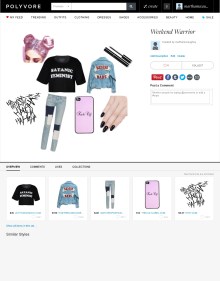


- Weekend Warrior (Man Repeller fashion blogger Leandra Medine)
- Go-Forth Granny (designer/model Iris Apfel)
- Suffragette Sleek (teen fashion blogger Justine Crawford
- Gonna Git You Sucka Casual (singer Tina Turner)
- Empowerment-is-the-New-Black (activist/author Gloria Steinem)
- Off-Duty Cop (comedian Whoopi Goldberg)
- Slut Walking Slick (comedian Amy Schumer)
- Sobriety Chic (not a waif? not on drugs? this might be the look for you!) (producer/actor Lena Dunham)
- Third-Wave Trendsetter (Instagram fashion guru Eva Chen)
- Underwear-as-Outwear-as-Fuckyouwear (singer Lady Gaga)
After all, what is fashion (or blogging) without a faith in the improbable?
20 Ways Women Participate in Blaming the Victim
- Check our breasts for suspicious lumps
- Wear seat belts in automobiles
- Avoid swimming in shark-infested waters
- Wear a heart monitor
- Get our teeth cleaned
- Have our cholesterol checked
- Take vitamins
- Get a pap smear
- Install anti-virus programs on our computer
- Lock our doors
- Install an alarm system
- Put safety lights on our bicycle
- Wear a fluorescent vest while jogging at night
- Drive with our headlights on
- Carry an umbrella
- Wear a winter coat
- Wash hands to avoid getting the flu
- When we see a raccoon in our garage awake in the middle of the day, with mouth foaming, do not pet it; instead call a neighbor who grew up in the country to come over and “take care of it”
- Tell our mother-in-law that we would love to spend the holiday at her cabin just to save ourself an argument
- Use birth control to prevent pregnancy
Dear See Jane Fight Back:
I object to your list of 20 ways women participate in victim blaming because some of those things are useful things any reasonable and responsible person—male or female—should do. For instance, many of us take vitamins and get our teeth cleaned. We also feel perfectly entitled to blame people who eat chili cheese fries whilst forgetting to take their Lipitor®.
However, I can agree to items 3, 9 10, and 11 on the grounds that those things involve other people whose behavior should be better controlled by their parents, the government, or the criminal justice system. Let’s arrest people who throw chum in the water when fishing off ocean piers. Let’s prevent burglaries so locking doors and home alarm systems aren’t necessary. Let’s show hackers that we shouldn’t have to protect our files and our hard drives from their malicious plans. We have a right to swim wear we want, compute how we want, and live without fear of burglary. In fact, I’m going to leave my unprotected computer in my unlocked house right now while I go jump off the fishing pier for a swim. In the dark. And I’ve just had a huge plate of chili cheese fries (and my Lipotor®)! Now this is true empowerment.
Yours,
Etc.
How the Grinch Stole the Fight

Every Girl down in Girlville
Believed she could fight
It made them feel empowered
It seemed like a right
It was something important they valued a lot
But the Grinch, at the CDC in Atlanta, did NOT!
He hated that women could learn how to fight
He hated that women
Did not need his oversight!
He hated that fighting was not just for guys,
He hated that fighting wasn’t driven by size.
Now please don’t ask the reasons, no one knows the whys.
It could be that his funding was a little too tight
Or that his head wasn’t screwed on just right.
But whatever the reason, his thinking or his monies,
The Grinch fumed in Atlanta at those feminist honeys
Who taught women to yell and to become empowered
They’d see those who crossed them’d be thoroughly devoured.
“They’ll have sex just when they want to!
They’ll enforce their own boundaries!
They’ll stop sexual assailants!”
Oh, the Grinch, he was foundering.
And the more that the Grinch thought, his heart growing cold
The more he hated self-defense and women all bold.
“They’ll insist they can resist and not do as they’re told!
This was all just keeping a set gender chasm.
The Grinch’s frail ego was starting to spasm,
“It’s as though they can act with their own damn intention!
It’s destroying the idea of bystander intervention!”
So the Grinch thus declared, with a determined sneer,
“I must stop women from fighting this year!”
And then the Grinch got a plan that was terribly grinchy
Terribly, status-quo awfully grinchy.
He’d dress like a bystander and take all their might.
The knights, they would win, ‘coz the damsels shouldn’t fight.
So off on his mission the Grinch quickly went
To save girls from themselves, with cis-gendered intent
From shelter to campus
From campus to class
The Grinch stole self-defense classes
There’d be no kicking ass!
He stole all their kick shields,
Unplugged all Nordic Tracks.
He took punching bags and focus pads
And just left the Rape-Axe.
He slithered and slunk through all-women dojos
The sensei was out, or she’d have dispatched him solo.
He got stuck only once, for a minute, just when
He stole self-defense data from the desk of Biden
In the VP’s own office, he mimicked Joe’s patter
“We don’t need self-defense, only bystanders matter!”
Two thousand feet up, right up Sawnee Mountain
The Grinch took equipment and data – discounting
The spirt of Girls down in Girlville who knew
Their empowerment wasn’t his call to eschew
“How scared they’ll all be,” he smugly thought to himself
“They’ll need rescuing now, they’ll need help from myself.
They can’t do it without me! And now that it’s clear
Their plaintive help cries I just simply must hear”.
But as the Grinch dangled his takings over the crevasse below
He heard, down in Girlville, a resounding “NO!”
Every Girl down in Girlville, the tall and the small
Could still fight–and without his approval at all!
“No, you won’t take our power, whether Grinch or White House
We’ll continue to fight – it’s our right, you big louse.”
Because the Girls in Girlville knew what the Grinch thought he’d win
Fighting spirit is something that comes from within.
And the Grinch, with his grinch-feet ice cold in the snow
Stood puzzling and puzzling – how coud it be so?
He puzzled and puzzled till his puzzler was sore
Then the Grinch thought of something he hadn’t before.
“Maybe safety,” he thought, “doesn’t come from a vow
Or a pledge or a poster or website – and now…
I see that while bystanders might still have their place
So too can girls make safe their own space.”
“Maybe safety,” he thought, “should be theirs for the taking
“not something to wait for me and boys to be making.”
And what happened then?
Well in Girlville, they say
The Grinch read all the data and for self-defense, made way
And then the true meaing of safety came through
And the Grinch called his colleagues, and told them that, too.
And all those with funding, all those with clout
Embraced self-defense training, putting aside all their doubt.
They returned the equipment, they shared all the data
They finally saw self-defense training was better
Better than waiting for changes to land
Better than hoping that help was at hand
Better because, while those things might be coming
The Girls down in Girlville would send the rapists running.
And with this new knowledge, they reminded them all
All those in rape prevention, the tall and the small,
That self-defense training wasn’t something awful
But was something to foster, and cheer, after all.
–The End–
Wishing you an empowering start to the holiday season –
Jill and Martha
Want to Make Women’s Self-Defense Acceptable? Dress it Up and Make it Pretty.
While delighted to see the New York Times publishing a piece on women’s self-defense (Abby Ellin’s November 14, 2015 piece “Using High Heels for Self-Defense“), I take serious exception with the media’s overall reluctance to embrace the data on the efficacy of women’s self-defense and self-defense training, their overlooking of the real stories of real girls and women thwarting rape and sexual assault, and their courting of the “Yes, but…” chorus who is always right there to chime in with the dangers of women serving as their own bystanders.
Unless it’s pretty. And ladylike. And feminine. In all the highly stereotypical, culturally-driven ways in which we use those words.
So it’s no fluke that when a media outlet like the New York Times publishes a piece about self-defense that is less apologetic, less gloom-and-doom, less “don’t try this at home”, it makes sure its readers know that these women are still following the rules of appropriate gendered behavior. They are still ladies.
Now, lots of women wear high heels. I, in fact, have several pairs in my closet, a number of which I can actually even walk in. Could they be used as a weapon? Sure. (They can also be used as a hammer. Or a door stop. Or a dog toy.) Could I fight while wearing heels? I don’t see why not.
But I’m not going to suggest to women and girls that in order to train in self-defense, or to fight back against an attacker, I must do so with all the trappings of femininity intact and in place. In fact, the scholarship on self-defense suggests that good feminine socialization is part of what gets unlearned in self-defense training, so that women have a full range of behaviors and options available to them to keep themselves safe.
I’m not going to fault Avital Zeisler for teaching women to fight in high heels, or even for suggesting, as she is quoted in this article, that women shouldn’t have to “compromise their femininity” in order to fight back. Whatever gets them in the door is more or less okay by me. And from what I gather from this article, high heels are not required equipment for the course. So I’m assuming that means that women don’t have to perform a particular type of femininity to take the class, either.
I am, however, going to fault the New York Times for its selective reporting. News flash, New York Times: rape and sexual assault are not pretty. So don’t suggest I have to be in order to fight.
Seventeen Years Ago, I Took a Self-Defense Course
In 1998, I took a self-defense course. It was a 20 hour empowerment self-defense course taught by Prepare, Inc., and I took it because I was afraid.
I was afraid from a lifetime of living in a rape culture. Some of that was specific. I was afraid when news of a serial rapist broke in the town I was living in during my graduate work. I was afraid hearing the stories of the trauma survivors I saw in therapy. But I was also more globally afraid – afraid when I left my lab after dark, afraid when I went to the grocery store at night, afraid to stop at rest stops during my interstate drives.
I wasn’t paranoid. I was afraid. A life time of shoulds and don’ts had settled into my skin – wear this, don’t wear that; stay here, don’t go there; be like this, not like that. I knew these rules were grounded in myths, not realities, of rape, and I could step back and see the irrationality, the false sense of security, the victim-blaming these rules generated. That knowledge made me no less afraid.
Sometimes I kept the rules, and sometimes I didn’t. I was tired of constraining my clothing, my activities, my choices. But I didn’t know what else to do.
And then, in 1998, my friend and colleague made me take a self-defense course.
I say “made” because she made me. I didn’t want to take it, although I didn’t tell her that. I told her I would think about it, that I would do it when my dissertation was done, that I would do it when it was closer to my home. But I was lying. I had no intention of taking it. I was afraid. I believed, in every inch of my being, that in the face of assault, there would be nothing I could do to thwart it. And I didn’t want to take a self-defense class to find out that I was right.
I had spent a lifetime learning the rules of gender engagement – what interaction between men and women could and would be like, especially if rape or sexual assault were threatened or attempted. I knew, in my bones, that as a woman, I had no recourse against a (likely larger, likely male) assailant. I couldn’t imagine resisting, either verbally or physically. Not even in my imagination! The thought of an imminent assault made my mind go blank. I would follow the rules, the shoulds and don’ts – or not – and hope for the best.
But she made me take the class. Ironically, if I had better verbal boundaries at the time, I might have said no, and held to that. But I didn’t want her to think less of me, and I didn’t want to think less of myself. As a feminist therapist who worked with trauma survivors, I wanted to be able to offer more to my clients than a set of rules that I knew would do nothing to maintain their safety. I wanted them to be less afraid, and I wanted to be less afraid.
So I took the class. I was afraid. I cried. I’m not sure I breathed during the 20 hours of training. And I learned that fear, and sadness, and anger, didn’t mean I couldn’t learn to defend myself, didn’t mean I couldn’t execute verbal and physical skills to maintain my safety. In the class, I used my voice and my words – clearly, powerfully, and loudly – to set my boundaries, to tell people what I needed and what I needed from them, and to engage others to assist me. I had many of those skills beforehand, at least in some situations, at least in theory. But it is hard to set boundaries when you are afraid what will happen if people don’t listen. And in the class, I used my body – hands and arms and knees and hips and legs and feet – in ways that were simple and strong and effective in creating distance, creating pain. I learned to fight off an assailant, an attacker, a rapist. I learned to fight back.
And in doing so, I learned that my female body was not as frail, as vulnerable, as rapeable, as I had been taught that it was. I learned that male bodies had points of vulnerability that rendered them human. And I was still afraid at times, but less so, and differently, because I knew that I had verbal and physical skills to manage that fear, and that I had a range of options available to me in a threatening situation that were going to be far more effective than the should and the don’ts.
I’ve been involved in self-defense research and training and teaching and activism for 17 years now, and so far, off the mats, I’ve never jabbed someone in the eye or kneed someone in the groin or kicked someone in the head. But I know that I can, and that those skills are there for my consideration and choosing should someone try to assault or rape me.
And yet, I’ve used what I learned in self-defense every day for the last 17 years. Because self-defense training changed my life. It taught me that I am worth fighting for, and that I can be the person in that fight. It taught me that I can stand up for myself and for others because I know what to do if a situation turns threatening or violent. Because I can fight, I don’t necessarily have to.
Self-defense training afforded me choices I don’t know if I would have seen without it. I made the choice to let the spouse and infant son of an abusive colleague live with me until they could find safe and affordable housing. I verbally addressed the young adolescent men at my college who muttered that they should have “grabbed [my] ass” as I walked past them. I told an intoxicated man to step back and let my son and I pass in a public park. And when a family member was menacing me and screaming obscenities in my face, I remained calm, stood confidently, put my hands up to create distance, and told him to back off. I could do all those things because I knew I had the physical resistance skills to turn to if the harassment and threats turned to violence.
Those are the big choices, where my physical safety and integrity were threatened, and where there was the potential for physical violence. But self-defense training has changed my life in a thousand other ways. I stood my ground through a multi-year divorce process full of conflict, emotional abuse, and economic threat. I set boundaries with colleagues or administrators who disrespect my time and my work. I stay calm when a student becomes angry and agitated and disrespectful. I feel entitled to challenge social injustice, be that a sexist or racist or homophobic joke, or telling a doctor not to tell my son a procedure won’t hurt when we both know it will. I can tell the people in my life what I want and need, and what doesn’t feel good to me. And I have taught physical and verbal personal safety skills to hundreds of men and women, students and colleagues.
When I hear people say that women shouldn’t have to learn self-defense, I am not inclined to agree. I am grateful that I did not wait for attitudes to change, for people to decide on their own to respect my physical and psychological integrity, for a passerby to intervene on my behalf. I would be delighted if people always treated each other as equals, if they abided by the boundaries other people set, and if they acted as engaged bystanders because they are part of a caring global community. But because of my self-defense training, even in that Utopian paradise, I would know my own strength, feel entitled to use it to preserve my health and well-being, and be able to make choices that feel healthy and right for myself.
Imagine…
Imagine a situation where a college woman- let’s call her “Jane” – is being targeted for sexual violence. Jane, like most women targeted, knows her perpetrator, a fellow student – let’s call him “Dick”. Dick wants to have sex with Jane. Maybe they are on a date, maybe they are at a party. Maybe he’s been drinking – maybe she has.
Dick wants to have sex with Jane.
Jane does not want to have sex with Dick.
Maybe Dick is trying to get Jane alone. Maybe Dick and Jane are already alone. Dick knows what consent is, and he knows the definition of sexual assault. He doesn’t think of himself as a rapist. But Dick has decided he’s going to have sex with Jane tonight.
Now, imagine that someone intervenes. What would that mean? It could mean that someone tells Dick that Jane is not interested, and suggests something different to do. It could mean that someone tells Dick, clearly and directly, that Jane is not going to have sex with him, and that he does not have the right to coerce or force her into having sex.
It could be that Dick listens. It could be that he doesn’t.
Someone now takes intervention to the next level. What would that mean? It could mean that someone creates a scene, making a private assault an opportunity for public help. It could mean that someone yells at Dick to stop what he’s doing. It could mean that someone strikes Dick or kicks Dick or knees Dick to create some pain that will allow Jane to get away.
Now, imagine that someone is Jane.
Self-defense training is training to be your own bystander. It’s not a guarantee of an outcome, it’s not a requirement to respond in a particular way, and it doesn’t tell women what they have to do or should do. But it absolutely expands the choices women have in the face of assault. We have a responsibility to offer that training to women.

 See Jane Fight Back
Recent Comments